When a homeowner hires us for whole-home selections — usually for a custom build or a major renovation — the most common question we get in the first meeting is some version of: "How does this actually work?"
It's a fair question. Most people only do this once or twice in a lifetime. So here's the rough shape of the process, in roughly the order things happen.
Phase 1 · Listening
Before we touch a single material, we spend real time learning who you are. How you cook. Whether you actually use a formal dining room or always end up at the island. What you keep on the bathroom counter. Whether the kids run the place or the kids fit in around it. The rooms we end up designing are built on these answers, not on a Pinterest board.
This phase is short on paper and long in practice. Plan for two to four conversations spread across two weeks. The work doesn't really start well until we know you well.
Phase 2 · Architectural conversation
If you're working with an architect or builder, we get into that conversation early. We're not architects, but we have opinions about millwork heights, lighting plans, the way a kitchen window relates to a backsplash, the way a hallway lands at a door. Catching these decisions in design phase saves a lot of money in build phase.
Phase 3 · Whole-home palette
Before we select a single light fixture, we set the home's overall language — primary palette, secondary palette, the materials that will repeat through the home, the materials that will only appear once. This is the foundation. Every later decision references back to it.
Phase 4 · Room-by-room selections
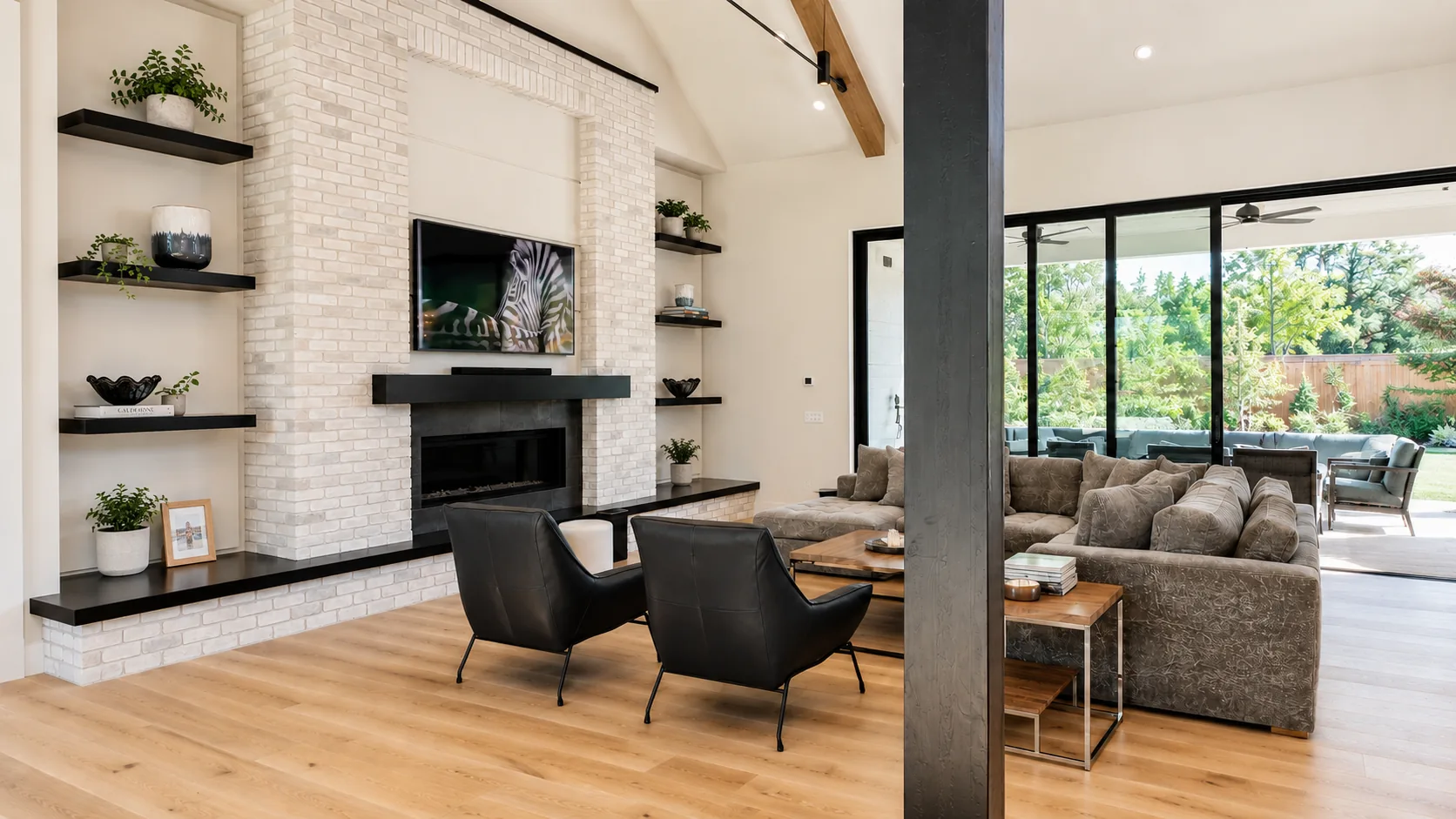
Now the actual selections start, and they happen in a particular order. Hard finishes first — flooring, cabinetry, counters, tile, plumbing, lighting. Soft finishes second — wall color, drapery, rugs. Furniture and accessories last. This order matters. Selecting a sofa before you've finalized the floor is a way to end up with a sofa that doesn't quite work in the room.
Phase 5 · Procurement and tracking
Once selections are signed off, we order. We track. We follow up with vendors when ship dates slip. We coordinate with the builder on installation sequence. This is the unglamorous middle of every project — the part most clients don't see, and the part where most projects either land well or fall apart.
Phase 6 · Install and styling
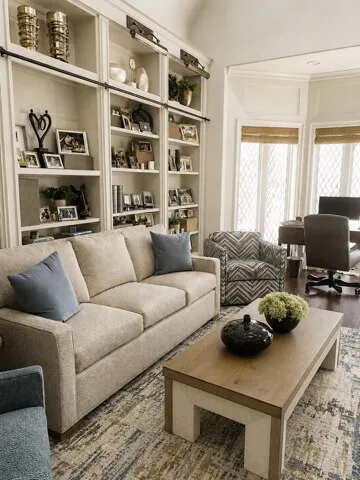
The most fun phase, and the one that separates a designer who shows up from a designer who hands you a binder and waves goodbye. We're on-site for installs. We hang the art. We arrange the bookshelves. We pull the wrong throw pillow and replace it with the right one. The home isn't done when the furniture arrives. It's done when it feels right.
How long does it take?
For a whole-home selection on a custom build, plan for nine to fifteen months from first conversation to final install — with most of that time being the build itself. For a renovation that's already underway, three to six months is more typical. Anyone promising you faster than that is probably skipping a phase.
There's no shortcut. There's only doing the right things in the right order. That's the whole job.
Veronica Eckhardt is the founder of Dress Your Home Interior Design in Colleyville, TX. Her process has been refined over more than thirty years of practice.